This guide is what worked for us and the people we've helped — it is not legal or immigration advice, and we are not legal or immigration professionals. Rules change, every situation is different, and the cost of getting it wrong (denied visas, double taxation, fines, missed deadlines) is real.
Before you act on anything here, speak with a qualified legal or immigration professional — an immigration lawyer (abogado de extranjería), a cross-border tax accountant, or a licensed gestor — who can review your specific facts. Use this guide to know what questions to ask, not as a substitute for paid advice.
The TIE (Tarjeta de Identidad de Extranjero) is the physical residence card you must obtain within 30 days of entering Spain on a residence visa, or within 30 days of your residence authorisation being approved if you applied from inside Spain. It is not optional and it is not the same thing as your NIE number — the NIE is a number, the TIE is the card that proves your legal residence status.
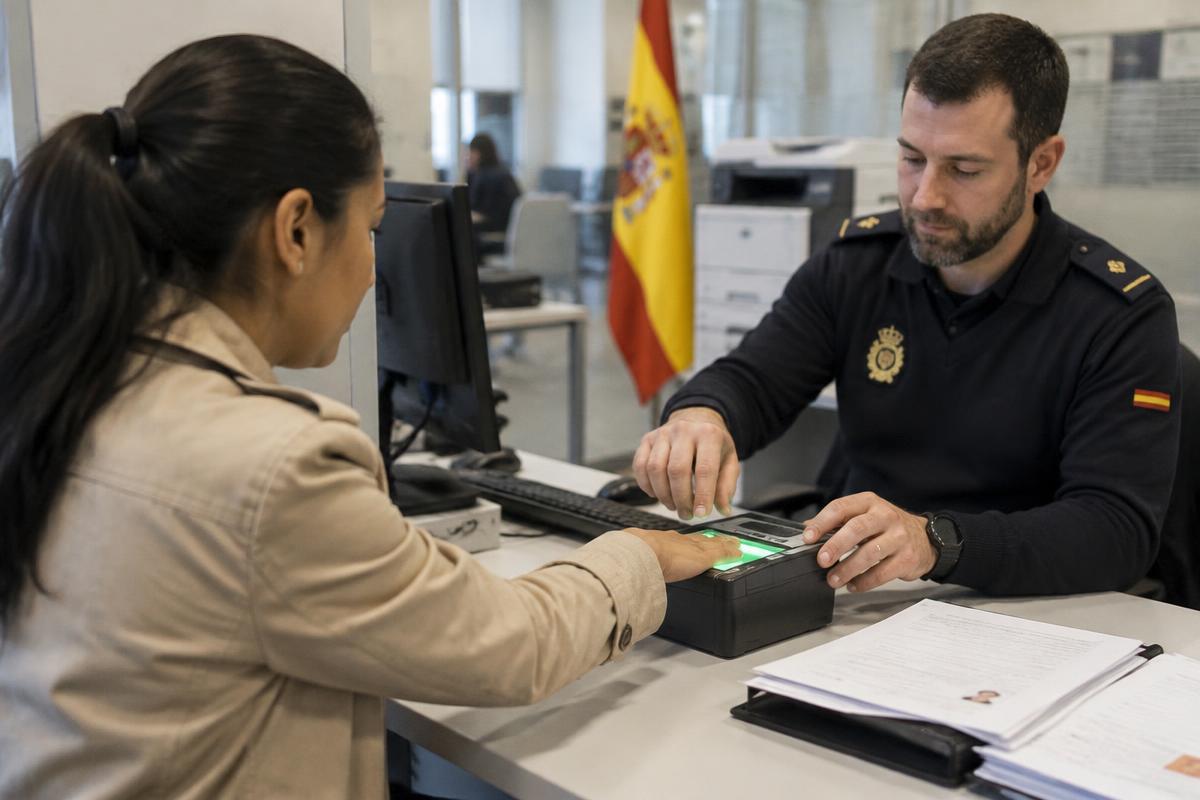
Getting the card requires two in-person appointments in most provinces: one to submit fingerprints and the application (Toma de huellas / Policía — Expedición de tarjeta), and one to collect the finished card (Recogida de tarjeta). Both are booked through the government's cita previa portal at sede.administracionespublicas.gob.es.
The problem: in Barcelona, Madrid, Málaga, Valencia and Alicante the portal routinely returns "En este momento no hay citas disponibles" for weeks at a time. Appointments are released in unpredictable drops — sometimes a handful at 8:00, sometimes a batch at midnight, sometimes nothing for four days — and they are taken within seconds by automated scripts.
That gap created an industry: cita previa services that run bots against the portal 24/7 and hand you a confirmed appointment, usually within 24–72 hours, for €30–€80. Some are run by licensed gestorías; some are one-person Telegram operations; a few are outright scams.
This guide covers all three: what a legitimate service does, what it should cost, how to brief it so the booking is actually valid, and how to get the appointment yourself for €0 if you have the patience.
Booking the wrong trámite is the single most common way people waste money with a service — the appointment gets cancelled at the desk and the service will not refund you, because they booked exactly what you asked for.
On the portal you select Provincia, then Trámites. The three options that matter for a TIE:
"POLICÍA — TOMA DE HUELLAS (EXPEDICIÓN DE TARJETA) Y RENOVACIÓN DE TARJETA DE LARGA DURACIÓN" — this is the fingerprints appointment. This is what you need first, after your residence authorisation is approved (or immediately after arrival on a residence visa).
"POLICÍA — RECOGIDA DE TARJETA DE IDENTIDAD DE EXTRANJERO (TIE)" — collection of the finished card, typically 30–45 days after fingerprints. Some provinces hand the card over without an appointment; others require this one.
"POLICÍA — CERTIFICADOS Y ASIGNACIÓN DE NIE" — NIE assignment only. This is not a TIE appointment. If you already have a residence authorisation, do not book this.
Also confirm the office: large provinces list several (e.g. Barcelona has CNP Rambla Guipúscoa, Manso, and several comisarías). Some offices only serve certain trámites, and some services will book you into an office 60 km away without telling you. Specify your acceptable offices in writing.
For the paperwork that goes with the appointment — Modelo EX-17, Modelo 790 código 012, photos, empadronamiento — see the checklist section below and our First 30 Days in Spain checklist.