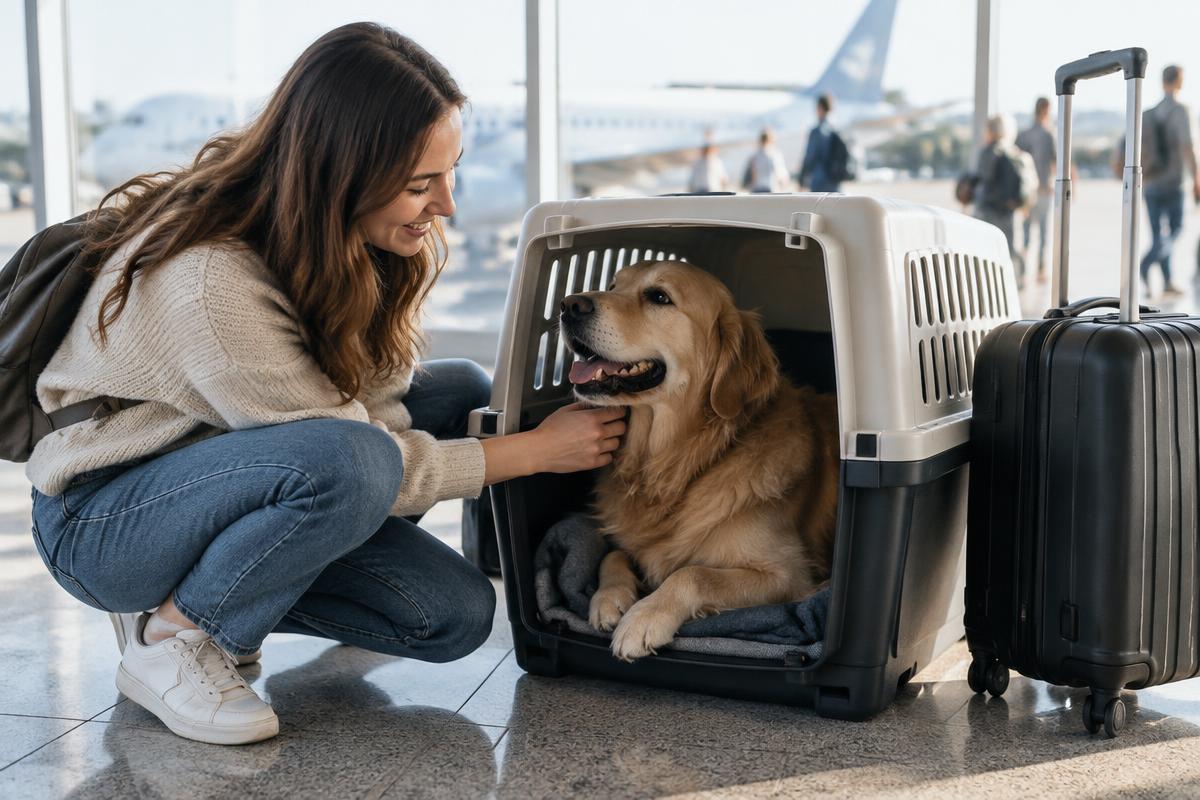
The single hardest thing about bringing a pet to Spain isn't the cost or the paperwork — it's the timing. The rabies vaccination has to be at least 21 days old (and not expired) on the day of arrival, the EU/USDA health certificate must be issued within 10 days of arrival, and the rabies titer blood test (only required if you're flying from a non-listed third country, which the US is NOT — see below) takes 3+ months. Start a calendar countdown today.
The good news for Americans: as of 2026, the United States is on the EU's list of 'listed third countries' for pet imports, which means you do NOT need the rabies titer (FAVN) blood test. You only need it if your pet has lived in a non-listed country in the 3 months before travel.
1) ISO-compliant 15-digit microchip (ISO 11784/11785). If your pet was chipped in the US with a non-ISO chip (AKC, Avid, HomeAgain pre-2009), bring your own ISO scanner OR have a second ISO chip implanted before the rabies shot.
2) Rabies vaccination administered AFTER the microchip was implanted, at least 21 days before arrival, and still valid on the day of arrival. The certificate must show the chip number, vaccine product name, batch, date, and validity.
3) USDA APHIS-endorsed EU health certificate (the Annex IV / EU non-commercial pet movement form, called the AHC), issued by a USDA-accredited veterinarian and endorsed (stamped) by your regional USDA APHIS office within 10 days of arrival.
4) Owner travels with the pet (or arrives within 5 days). If a separate person flies the pet in, the move is treated as commercial and triggers a much heavier paperwork track (TRACES-NT, CITES if applicable, customs declaration).
Day −120: confirm your pet's chip is ISO-compliant. If not, schedule a second chip implant.
Day −100 to −60: rabies vaccine (or rabies booster if the current one will expire mid-stay). Keep the signed vet certificate.
Day −30: schedule the USDA-accredited vet appointment for the AHC. Confirm the vet is on the USDA APHIS accredited list (vsapps.aphis.usda.gov).
Day −10 to −7: USDA-accredited vet issues the AHC. The form is a multi-page bilingual document — vet signs every page.
Day −7 to −2: ship the AHC overnight (or hand-deliver) to your USDA APHIS regional office for endorsement. As of 2026, most states use VEHCS, the online USDA endorsement system, which returns a digitally endorsed PDF in 24–72 hours. Sterling, VA and most regional offices charge $38–$173 depending on whether endorsement is digital or physical.
Day 0: arrive in Spain through a designated Traveler Point of Entry (Madrid-Barajas, Barcelona-El Prat, Málaga, Palma de Mallorca are the main ones). Walk through the 'red channel' for goods to declare and present your pet + paperwork to the Resguardo Fiscal officers.
In cabin (under ~8 kg / 17 lb including carrier, varies by airline): Iberia, Air Europa, Vueling, KLM, Air France, Lufthansa, Swiss, and United (US–MAD, US–BCN). Cabin fees are $125–$250 one-way.
In the hold (as 'checked baggage' on the same flight as you): Lufthansa, Air France, KLM, and Iberia on most US routes. Fees $200–$700 one-way depending on weight/size.
American Airlines and Delta have suspended or sharply restricted pet-in-hold service on transatlantic routes — check the latest before booking.
Cargo (separate booking via a pet shipper): required for snub-nosed breeds, large dogs, and most flights in summer. Budget $1,500–$4,000 one-way through Air Animal, PetRelocation, or Starwood Pet Travel.
Snub-nosed breeds (bulldogs, pugs, Persians, etc.): most carriers refuse to fly them in the hold and in cabin restrictions vary. Lufthansa is generally the most accommodating. Confirm in writing before booking.
Cabin carrier must fit fully under the seat in front of you. Soft-sided is fine on most carriers. Sherpa Original Deluxe and Petsfit Carrier are the most-used brands by US-to-Spain travelers.
Hold crates must be IATA-compliant (CR-82) — hard plastic, ventilated on at least three sides, with food and water dishes attached inside the door, absorbent bedding, and 'Live Animal' stickers on top and sides.
Crate sizing: your pet must be able to stand fully upright (without ears touching), turn around comfortably, and lie naturally. Order one size up from what looks right; rejection at the gate is common with marginal sizes.
Practice with the crate at home for at least 4–6 weeks before travel — feed in it, leave the door open, build positive association.
On landing, follow the airport signs for 'PIF / Customs - goods to declare' (the red channel). At Madrid-Barajas this is on the Llegadas Internacionales level; at Barcelona-El Prat, T1 has a dedicated PIF window in the baggage claim area.
Present your USDA-endorsed AHC, rabies certificate, and microchip records. The officer scans the chip and signs/stamps your paperwork. Total time: 10–30 minutes if your file is complete; up to 2–3 hours during peak holiday weekends.
There is no quarantine for compliant pets from the US. Pets without complete documentation can be held at owner's expense until paperwork is fixed (rare but it happens — usually missing rabies certificate or non-ISO chip).
You're now legally in Spain with your pet. Do NOT exit the airport through the green/nothing-to-declare channel with a pet — that's technically smuggling, even if you have the paperwork.
Within 3 months of arrival (sooner is better), register your pet with the regional REIAC (Registro de Identificación de Animales de Compañía) for your autonomous community. A local Spanish vet does this in a single appointment with your imported microchip and rabies records — typically €30–€60.
Get a pasaporte europeo para animales de compañía (EU Pet Passport) at the same visit (~€20–€40). This replaces your USDA AHC for all future EU travel and Spain↔EU re-entry. It's a small blue booklet that your vet maintains for the rest of the pet's life.
Some autonomous communities (Madrid, Catalonia, Andalusia) require additional municipal registration via the Ayuntamiento and proof of liability insurance for certain breeds. Bring your empadronamiento.
Spain's 2023 animal welfare law (in force since September 2023) added requirements that affect most expats: mandatory civil liability insurance for all dogs (not just XL/PPP breeds), mandatory online owner-education course before adopting a dog, prohibition on leaving dogs alone for more than 24 consecutive hours, and stricter rules on tying up dogs.
PPP (Perro Potencialmente Peligroso) breeds (Rottweiler, Pit Bull, Staffordshire Bull Terrier, American Staffordshire Terrier, Dogo Argentino, Fila Brasileiro, Tosa Inu, Akita Inu, and any dog meeting the size/jaw-strength criteria): require a PPP license from the local municipality, a clean criminal record check, psychological and physical fitness certificates, muzzle in public, and €100k+ liability insurance.
All other dogs: standard civil liability insurance is €60–€120/year. Most home insurance policies (seguro de hogar) include it; confirm before paying separately.
The dynamic Latest Updates section above tracks any amendments to the law and any new royal decrees on its implementation.
Vet visits (chip if needed, rabies booster, AHC issuance): $200–$500.
USDA APHIS endorsement: $38–$173.
Sworn translation if you're doing the consulate route paperwork in parallel: not required for the AHC.
Airline fee: $125–$700 one-way for cabin/hold; $1,500–$4,000 for cargo/pet shipper.
IATA-compliant crate (if flying hold): $80–$300 depending on size.
Spanish registration + EU Pet Passport in first month: €50–€100.
Annual Spanish costs after arrival: insurance €60–€120, vet checkups €100–€200, food and supplies €700–€1,400. Cheaper than most US cities.
Total realistic landing cost for one medium dog flying cabin or hold: $700–$1,800.
Cats follow the same rules as dogs — microchip, rabies, AHC, USDA endorsement. No titer test from the US.
Most cabin carriers fit a cat under 6kg comfortably. Cats almost always fly in cabin; very few US-to-Spain travelers fly cats in the hold.
Cats are exempt from the new dog-specific Ley 7/2023 requirements (no insurance mandate, no owner-education course).
Pet passport and REIAC registration are still required.
AHC + USDA endorsement in a clear plastic sleeve in your carry-on (not in checked bag).
Two printed copies of every document plus a phone scan.
Microchip number written on the carrier and on your pet's collar tag.
Vet-prescribed anti-anxiety medication ONLY if you've tested it on a non-flight day first (sedation in the hold is dangerous and against most airline policies).
Absorbent pads in the carrier; spare pads, wipes, and a small water bottle in your carry-on.
Photo of the chip implant certificate AND your pet's most recent vet records on your phone, in case the printed file is questioned. contact us.